
How to design a better cleaning tank for Jiangmen ultrasonic cleaning machine
In the ultrasonic cleaning process, the primary cleaning work is completed in the ultrasonic cleaning tank. A cleaning tank is a container that contains cleaning solution and the workpiece to be cleaned. Generally, the workpiece to be cleaned is not directly placed in the cleaning tank, but is stored in a dedicated mesh frame or suspended in the cleaning solution on a dedicated bracket to avoid direct pressure on the bottom of the cleaning tank. Ultrasonic transducers are generally glued directly onto the bottom plate of the cleaning tank using specialized adhesive, or onto the tank wall according to cleaning requirements. To improve the cleaning effect, auxiliary equipment such as heaters and temperature control can be installed on the cleaning tank according to the needs.
Scale size is the primary parameter indicator for ultrasonic cleaning tanks, and the size of the cleaning tank corresponds to the sound power transmitted by the transducer. The larger the volume of the cleaning tank, the greater the required ultrasonic power. The size design of a general cleaning tank is determined based on the cleaning needs. For large-scale cleaning, it is necessary to use a larger cleaning tank, such as a constant temperature tank. However, if a cleaning tank that is too large is selected, it will cause power waste. For small batch cleaning of small parts, it is necessary to choose a smaller cleaning tank, but if the selected cleaning tank is too small, it will limit the size and quantity of the workpiece to be cleaned.
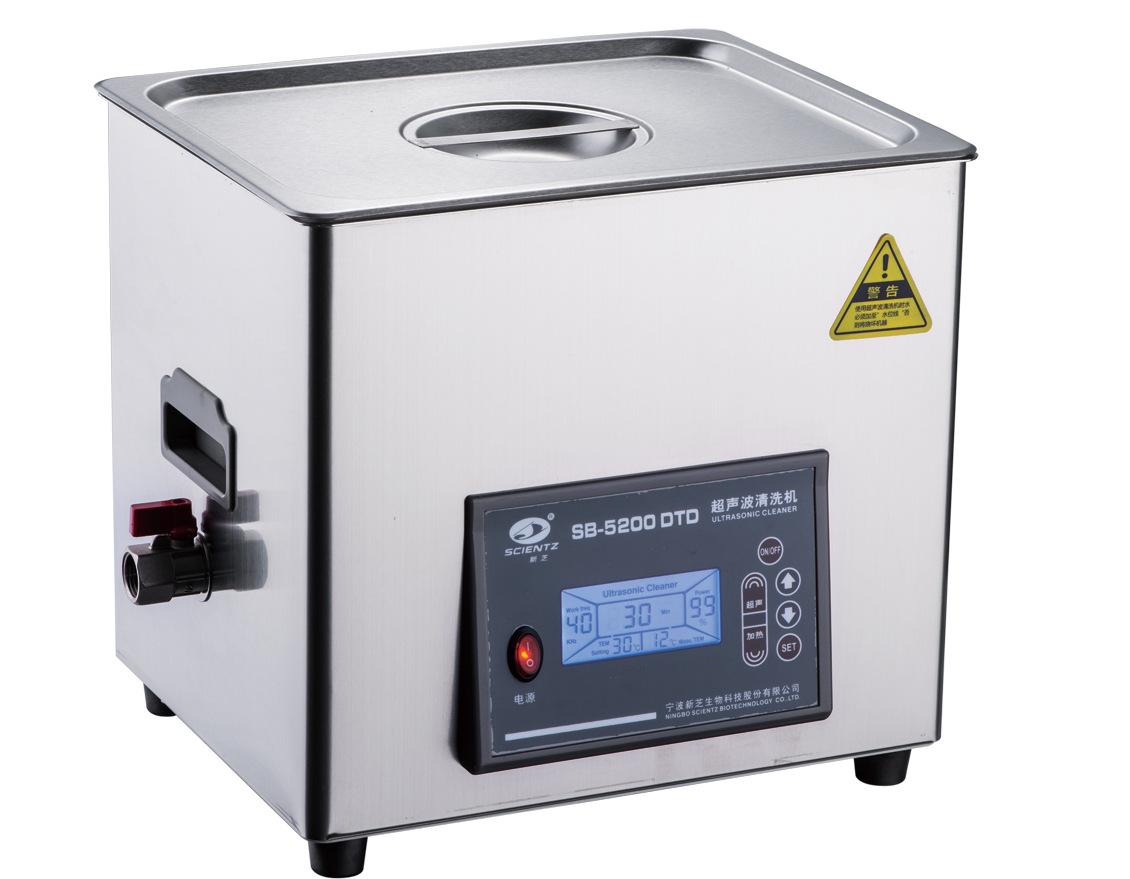
Geometric shape is the key to the design of ultrasonic cleaning tanks. In general, small ultrasonic cleaning equipment can be selected as circular or regular polygons, such as hexagons. Medium power ultrasonic cleaning equipment should be square shaped. Large industrial cleaning lines use rectangular cleaning tanks.
Because the action area of ultrasound is limited to the inside of the cleaning tank, the geometric shape of the cleaning tank will directly affect the dispersion of the ultrasound field in it. The shape of the cleaning tank is suitable, which can evenly distribute the ultrasonic field in it. If one of the bottom corners is cut into an isosceles triangle or a slanted quadrilateral cleaning tank is used, the workpiece to be cleaned can be effectively cleaned in any orientation in the cleaning tank. Typical cleaning tanks use symmetrical geometric shapes.
Article source: Jiangmen Ultrasonic Cleaning Machine http://www.kpzfcsb.com/
-
04-01
Jiangmen Ultrasonic Cleaning Machine: What are the reasons for poor cleaning effect?
People originally use ultrasonic cleaning machines for convenience, and if ultrasonic cleaning is not clean, they will definitely feel sad in their hearts. What is the reason for the uncleanliness of
-
01-04
Cleaning process of ultrasonic cleaning machine
Cleaning processSelect a reasonable ultrasonic cleaning machine process based on the characteristics and contamination of the workpiece.4. How to choose between manual and semi-automaticManual operati
-
12-16
Instructions for using Jiangmen ultrasonic cleaning machine
1. Device ultrasonic cleaning machinePlease refer to the instruction manual of the ultrasonic cleaning machine to connect the temperature control sensor signal line, ultrasonic drive line, heater cont
-
12-10
Cavitation phenomenon of Jiangmen ultrasonic cleaning machine
Magical cavitation phenomenonWhen it comes to ultrasonic cleaning, some people may think that it is the use of high-frequency vibration of ultrasonic waves to destroy dust and dirt. Actually, ultrason