
Technical support for multifunctional ultrasonic cleaning machine
1. Ultrasonic frequency: Physically, mechanical waves with a frequency greater than 20KHz are referred to as ultrasonic waves; The lower the frequency of ultrasonic waves, the simpler the cavity formation in the liquid, and the stronger the intensity and effect of the formation. It is suitable for initial cleaning of workpieces (coarse or dirty); High ultrasonic frequency results in strong ultrasonic directionality, making it suitable for precise cleaning of fine workpieces.
2. Sound power density (ρ): ρ=emission power (W)/emission area (CM2); Generally, when ρ ≥ 0.3W/CM2, the cleaning requirements can be met. The ultrasonic power density we commonly use is greater than 0.5W/CM2, which can completely meet the requirements for general industrial cleaning. The higher the power density, the stronger the cavity effect, the faster the speed, and the better the cleaning effect. However, for fine and highly polished products, long-term high-power density cleaning can cause "cavity" corrosion on the surface of the product.
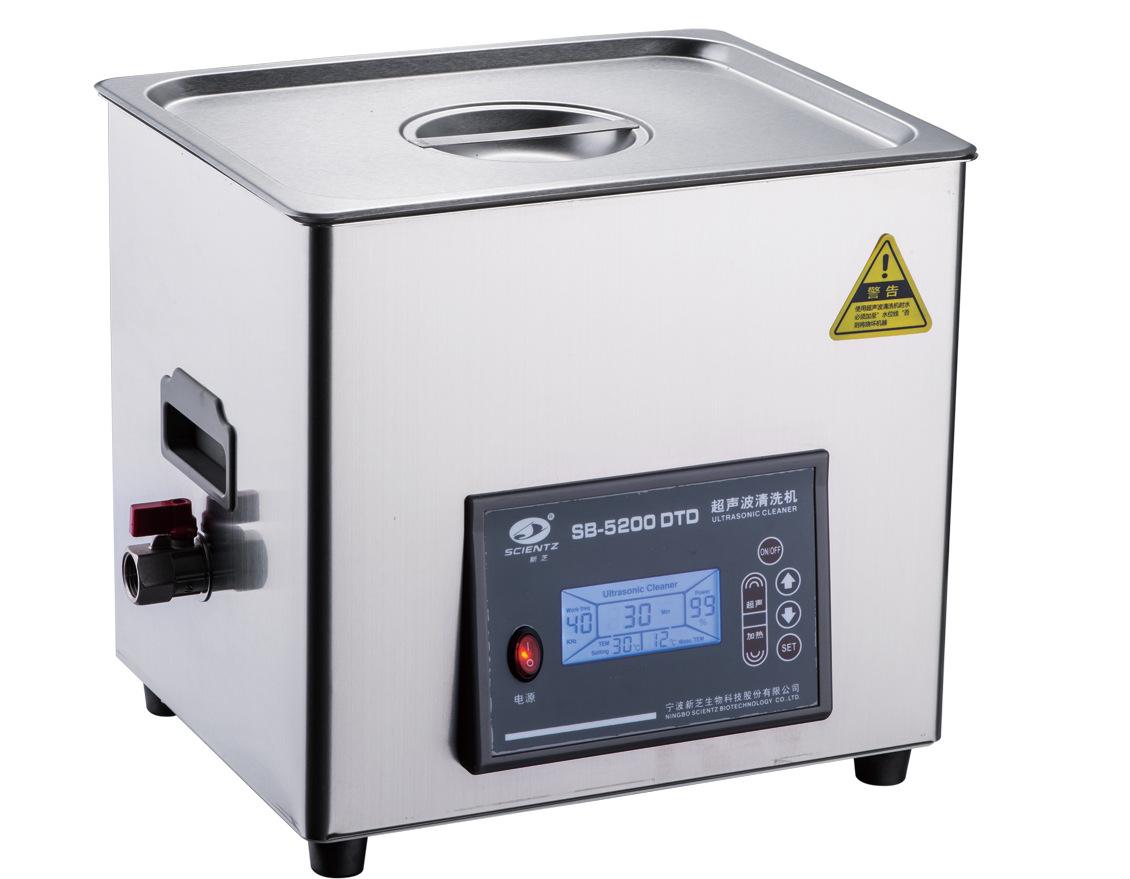
3. Cleaning media: Ultrasonic cleaning generally includes two types of cleaning agents: chemical cleaning agents and water-based cleaning agents; The chemical effect of cleaning media can accelerate the cleaning effect of ultrasonic waves. Ultrasonic cleaning is a physical effect that combines two effects to thoroughly and thoroughly clean products.
4. Cleaning temperature: Generally speaking, ultrasonic waves have the best cavity effect at 30-40 ℃; If cleaning agents are used, the higher the temperature, the more obvious the effect. When using ultrasonic cleaning in general practice, a working temperature of 40-60 ℃ is preferred.
5. The placement method of the product and the selection of cleaning solution amount during cleaning: Generally, the liquid level of the cleaning solution should be at least 50mm higher than the vibrating surface. For larger workpieces, stainless steel mesh cages are generally used for cleaning, and the mesh size of the mesh cage has a certain impact on the cleaning effect. Nowadays, industrial cleaning requires a mesh size greater than 10mm.
Article source: Jiangmen Ultrasonic Cleaning Machine http://www.kpzfcsb.com/
-
04-01
Jiangmen Ultrasonic Cleaning Machine: What are the reasons for poor cleaning effect?
People originally use ultrasonic cleaning machines for convenience, and if ultrasonic cleaning is not clean, they will definitely feel sad in their hearts. What is the reason for the uncleanliness of
-
01-04
Cleaning process of ultrasonic cleaning machine
Cleaning processSelect a reasonable ultrasonic cleaning machine process based on the characteristics and contamination of the workpiece.4. How to choose between manual and semi-automaticManual operati
-
12-16
Instructions for using Jiangmen ultrasonic cleaning machine
1. Device ultrasonic cleaning machinePlease refer to the instruction manual of the ultrasonic cleaning machine to connect the temperature control sensor signal line, ultrasonic drive line, heater cont
-
12-10
Cavitation phenomenon of Jiangmen ultrasonic cleaning machine
Magical cavitation phenomenonWhen it comes to ultrasonic cleaning, some people may think that it is the use of high-frequency vibration of ultrasonic waves to destroy dust and dirt. Actually, ultrason