
What are the common temperature control methods for ultrasonic cleaning machines
Ultrasonic cleaning machine metal surface treatment manufacturing profession, such as electroplating process manufacturing profession. Electroplating process is a technical technique that uses electrolysis to deposit metal materials or aluminum alloys on the surface of electroplated parts, producing a metal coating on the metal surface treatment technology. This will harm people's physical and mental health as well as the natural environment. For example, the treatment of electroplating wastewater will cause greater damage to the natural environment, and long-term electroplating process operators will be confused by skin diseases, pharyngitis, and other illnesses. Nowadays, some electroplating processes use non natural chemical raw materials, which can bring their chemical materials into the coating during the electroplating process, immediately harming the physical and mental health of customers.
Ultrasonic cleaning machine is very important in the pre-treatment process of coating. The traditional processes are generally degreasing, water washing, hydrochloric acid rust removal, water washing, neutralization, water washing, surface adjustment, water washing, phosphating, water washing, and drying. The major harm of this process is that it is difficult to clean the residual acid after pickling and rust removal of structurally disordered parts, especially after phosphating of welded components. The residual liquid contained in the gaps affects the processing of subsequent processes. After the workpiece is sprayed, rusting occurs along the gaps for a short period of time, damaging the surface of the coating. Seriously affecting the appearance and internal quality of the product. Such as motorcycle wheels, fuel tanks, frames, anti-theft doors, etc.
Ultrasonic cleaning machines are used in households: daily items such as gold, silver, jewelry, headwear, brooches, glasses, watch chains, pens, CDs, razors, combs, toothbrushes, dentures, tea sets, as well as bottles, nipples, and fruits such as grapes, cherries, and strawberries are disinfected and sterilized while being cleaned. Ultrasonic waves can also be used for beauty and skincare on other hands. Long term use can maintain the skin's youthfulness, lubrication, and elasticity. The use of ultrasonic cleaning equipment can also be used for mixing cocktails, mellow alcoholic beverages, automatic mixing of eggs, and more.
The working principle of ultrasonic cleaning machine is to use the cavitation effect of ultrasonic waves in liquid to generate many non-stationary small bubbles. Under the action of sound field, the bubbles undergo a physical process of compression to expansion tens of thousands of times per second. Liquid particles collide violently and generate very strong energy, which is enough to quickly drop the particles adsorbed on the surface of the object and achieve the purpose of cleaning.
The liquid that permeates the welding gap during processes such as oil removal, rust removal, water washing, surface adjustment, and phosphating is difficult to discharge, and water washing cannot completely remove it. Under humid and hot conditions, impurities are prone to cause yellowing and rusting of the workpiece. If these residual liquids cannot be completely dried during the drying process, and then powder coating is dried at high temperature, the residual liquids will seep out of the weld due to thermal expansion, affecting the bonding between the coating and the metal surface, and causing a decrease in the adhesion or even detachment of the coating.
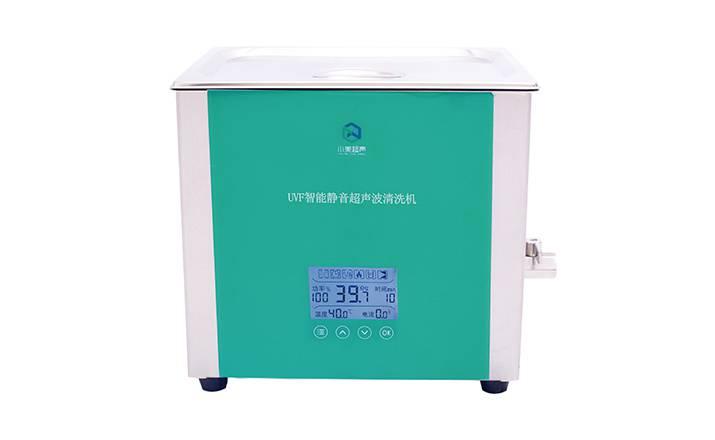
Ultrasonic cleaning machines generally have timed or heating functions. Three common cleaning methods for ultrasonic cleaning machines are CNC panel heating, temperature controller heating, and mechanical temperature control:
Ultrasonic cleaner is a new generation product that has been improved and innovated based on abundant absorption of advanced foreign experience. Its application and functions have reached the level of similar foreign products. Thorough standardization, diverse samples, with over 100 products in 6 major series. There are capacities of 0.8L, 1.5L, 2L, 3L, 4.5L, 6L, 7.5L, 10L, 22.5L, etc. It is divided into basic type, power and degassing adjustable type, digital heating type, remote control type (within 50 meters), and can be customized for users with special requirements such as sink size, ultrasonic power, liquid heating, etc.
1. Mechanical temperature control: Generally, desktop ultrasonic cleaning machines use mechanical temperature control, which means adjusting the temperature with a knob.
2. Temperature controller heating: The split ultrasonic cleaning machine can be heated with a temperature controller according to the application situation. The usage method is as follows: press the heating switch, and the temperature controller will flash to measure and control the temperature. The flashing above is for measuring temperature, and the flashing below is for controlling temperature. When the measured temperature is lower than the control temperature, the out light on the temperature controller will turn on, the heating indicator light will turn on, and the device will be in heating condition; When the measured temperature is higher than the control temperature, the out light on the temperature controller goes out, the heating indicator light goes out, and the equipment intermittently heats up. Control temperature setting method: Press the dip key to set the control temperature, which is usually heated with a heating tube;
3. Numerical Control Panel Heating: A type of numerical control ultrasonic cleaning machine commonly used in laboratories with heating function. The temperature in the numerical control area flashes and can be set. When the heating value is reached, it will automatically interrupt heating. This type of heating is usually done using a silicone plate.
Article source: Kaiping ultrasonic cleaning machine http://www.kpzfcsb.com/
-
04-01
Jiangmen Ultrasonic Cleaning Machine: What are the reasons for poor cleaning effect?
People originally use ultrasonic cleaning machines for convenience, and if ultrasonic cleaning is not clean, they will definitely feel sad in their hearts. What is the reason for the uncleanliness of
-
01-04
Cleaning process of ultrasonic cleaning machine
Cleaning processSelect a reasonable ultrasonic cleaning machine process based on the characteristics and contamination of the workpiece.4. How to choose between manual and semi-automaticManual operati
-
12-16
Instructions for using Jiangmen ultrasonic cleaning machine
1. Device ultrasonic cleaning machinePlease refer to the instruction manual of the ultrasonic cleaning machine to connect the temperature control sensor signal line, ultrasonic drive line, heater cont
-
12-10
Cavitation phenomenon of Jiangmen ultrasonic cleaning machine
Magical cavitation phenomenonWhen it comes to ultrasonic cleaning, some people may think that it is the use of high-frequency vibration of ultrasonic waves to destroy dust and dirt. Actually, ultrason