
What is the impact of Jiangmen ultrasonic cleaning machine on the quality of PVD coating
Cleaning is the process of removing oil, rust, dust, and other contaminants from a workpiece through chemical or (and) physical methods to ensure good coating adhesion and smooth production. Cleaning is an essential process before PVD coating, and it is also the most important process in PVD coating production. If there is a problem with cleaning, the coating production will have to be delayed, the coating process may be interrupted, or there may be problems with coating adhesion, which can lead to customer complaints and compensation. Especially in cases where the coating equipment's skills are not high, if there is a problem with cleaning, it is more likely to cause the above risks.
There are four factors that affect the quality of cleaning, namely cleaning time, chemical agents, mechanical action, and cleaning solution temperature. These four factors also affect each other. The weakening of one factor can be compensated for by enhancing the effects of the other three factors, and vice versa. Among these four elements, minimizing the cleaning time is also the goal sought, which can advance the cleaning power, shorten production time and delivery cycle.
The primary methods and processes for cleaning should include: chemical spraying, chemical soaking and ultrasonic cleaning, rinsing, and drying.
1) Chemical spray
Spraying is very useful for cleaning, as it can remove most of the oil and pollutants from the workpiece. Especially for workpieces with holes, it is more useful as the chemical agent sprayed onto the workpiece will flow into the hole or be directly sprayed into the hole to flush the inner wall of the hole. So when cleaning and installing cards, it is necessary to ensure that all workpieces can be sprayed. Furthermore, assuming that the chemical agents sprayed onto the workpiece cannot flow away immediately in a timely manner, it will prevent fresh chemical agents from continuing to clean the workpiece, and it will also be difficult to dry in the subsequent drying process. Therefore, when installing the card, it is necessary to ensure that the chemicals flowing onto the workpiece can naturally flow away.
2) Chemical immersion and ultrasonic cleaning
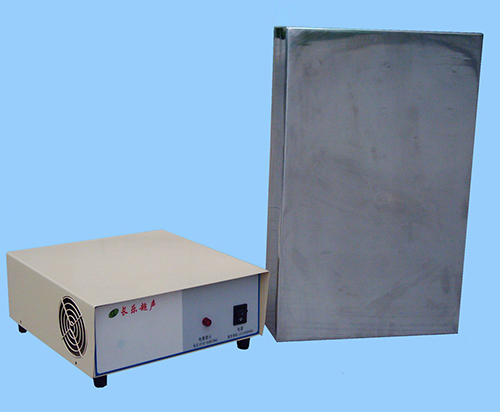
Ultrasonic waves are a type of sound wave that cannot be felt by humans, and they are also a type of mechanical wave. They form high-pressure and low-pressure zones (with pressure lower than atmospheric pressure) in liquids. Ultrasonic waves generate millions of cavitation effect bubbles in low-pressure zones, which gradually increase in size and suddenly burst inward when necessary, releasing enormous energy and hitting the workpiece, thus playing a "micro brush" cleaning role on the surface of the workpiece. The frequency of this "micro brush" is very high, and the ultrasonic frequency used for cleaning is between 20000 and 50000 hertz.
Because ultrasound waves can cause low-pressure and high-pressure areas during transmission, and cavitation only occurs in low-pressure areas. So the cleaned workpiece needs to oscillate up and down in ultrasonic waves, so that each area on the workpiece passes through a low-pressure zone to achieve the cleaning effect of a "micro brush". The transmission speed of ultrasound in water is 1500m/s. Assuming the frequency of ultrasound crossing is 30000Hz, the wavelength of ultrasound crossing used is
λ=speed/frequency=1500/30000=0.05m=5cm
So, if 30000Hz ultrasonic waves are used, the vertical oscillation interval of the workpiece should not be less than 5 centimeters. For other frequencies of ultrasonic waves, the vibration interval can be calculated in the same way. In the simple chemical immersion cleaning, the cleaning solution first dissolves the pollutants on the surface of the workpiece and gradually penetrates and dissolves into the interior of the pollution layer. In this process, a layer of dissolution and fullness is gradually formed on the surface of the workpiece. This fullness layer blocks the fresh chemical cleaning solution from the deep pollutants, preventing the cleaning solution from continuing to dissolve the deep pollutants. Assuming that this fullness layer cannot be damaged or removed, the cleaning is interrupted. It is difficult to thoroughly clean dirty workpieces using simple soaking and cleaning methods. The use of ultrasonic "micro brushes" can damage the dissolved and plump layer on the surface, and new chemical agents can continue to dissolve in deeper pollution layers. Ultrasonic waves then continue to damage the newly formed dissolved and plump layer, and this cycle continues until the workpiece is cleaned thoroughly.
3) Rinse off
Rinsing is to thoroughly clean the cleaning solution or other dirt remaining on the workpiece, making it cleaner before drying. The residue on the workpiece will be difficult to clean after drying. In the industrial field, deionized water is generally used for rinsing, using deionized water instead of tap water for rinsing can avoid impurities and pollutants in tap water from remaining on the workpiece. However, deionized water has strong corrosiveness and can cause corrosion to the workpiece. Therefore, a certain amount of rust inhibitor must be added to deionized water in order to rinse the workpiece and avoid rusting during the rinsing and drying process.
4) Drying
The cleaned workpiece is usually placed in an oven for drying, which includes a box, drainage pipeline, heating system, exhaust system, and temperature control system. The eternal joy entertainment has a vaporization temperature of 100 ℃, so the baking temperature must be greater than 100 ℃, preferably between 110 ℃ and 130 ℃. This can quickly evaporate moisture and dry the workpiece without requiring a long cooling time due to the high temperature of the workpiece after drying.
Article source: Jiangmen Ultrasonic Cleaning Machine http://www.kpzfcsb.com
-
04-01
Jiangmen Ultrasonic Cleaning Machine: What are the reasons for poor cleaning effect?
People originally use ultrasonic cleaning machines for convenience, and if ultrasonic cleaning is not clean, they will definitely feel sad in their hearts. What is the reason for the uncleanliness of
-
01-04
Cleaning process of ultrasonic cleaning machine
Cleaning processSelect a reasonable ultrasonic cleaning machine process based on the characteristics and contamination of the workpiece.4. How to choose between manual and semi-automaticManual operati
-
12-16
Instructions for using Jiangmen ultrasonic cleaning machine
1. Device ultrasonic cleaning machinePlease refer to the instruction manual of the ultrasonic cleaning machine to connect the temperature control sensor signal line, ultrasonic drive line, heater cont
-
12-10
Cavitation phenomenon of Jiangmen ultrasonic cleaning machine
Magical cavitation phenomenonWhen it comes to ultrasonic cleaning, some people may think that it is the use of high-frequency vibration of ultrasonic waves to destroy dust and dirt. Actually, ultrason