
What are the validation methods for analyzing the ultrasonic performance of Kaiping ultrasonic cleaning machine
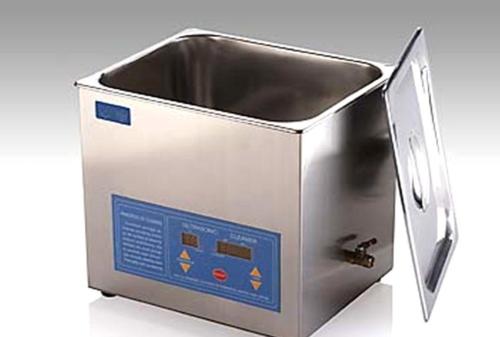
Most CSSD devices require detection in two aspects. One is the verification of the device's own functionality (PQ), and the other is the monitoring of its effectiveness. The fully automatic cleaning and disinfection machine requires functional verification (temperature and time testing) and cleaning effect testing (such as ATP method, protein residue testing, etc.) [ISO 15883], the sterilizer requires functional verification (temperature and pressure testing) and sterilization effect monitoring (such as biological monitoring) [WS 310], and the sealing machine requires functional verification and sealing effect testing Similarly, ultrasonic cleaning machines can also perform two types of testing, and here are some introductions for functional verification.
Because the principle of ultrasonic cleaning is cavitation effect, its functional verification is primarily focused on the cavitation effect, with the intention of examining whether there are blind spots in the sound field intensity inside the cleaning tank. There are many methods, here are a few examples for reference.
Method 1: Aluminum foil corrosion method
Fix the 20-30 μ m thick aluminum foil on a bracket and place it straight into the cleaning tank without touching the bottom. After being turned on for a period of time, the degree of corrosion on the surface of the aluminum foil in different areas can directly reflect whether the ultrasonic intensity at that depth is uniform. If you want to detect the spread of ultrasonic intensity in the horizontal direction, you can place the aluminum foil horizontally. According to the manufacturer's manual, if there is a>; A blank space of 1 square inch (6.45cm2) is the cold spot.
This method is intuitive and simple, but cannot be quantitatively tested, resulting in significant errors. It is difficult to achieve testing under loading conditions and may react chemically with alkaline cleaning agents. Sometimes the entire piece may fall, so it is necessary to set the ultrasound time properly.
Method 2: Glass slide washing method
Using HB pencil to alter glass slides every week, ultrasonic cleaning within 3 minutes is considered qualified, and the results are recorded (IAHCSMM Reeducation Practice Manual 2006, USA).
This method is simple to operate, but cannot be quantitatively tested, resulting in significant errors.
Article source: Kaiping ultrasonic cleaning machine http://www.kpzfcsb.com/
-
04-01
Jiangmen Ultrasonic Cleaning Machine: What are the reasons for poor cleaning effect?
People originally use ultrasonic cleaning machines for convenience, and if ultrasonic cleaning is not clean, they will definitely feel sad in their hearts. What is the reason for the uncleanliness of
-
01-04
Cleaning process of ultrasonic cleaning machine
Cleaning processSelect a reasonable ultrasonic cleaning machine process based on the characteristics and contamination of the workpiece.4. How to choose between manual and semi-automaticManual operati
-
12-16
Instructions for using Jiangmen ultrasonic cleaning machine
1. Device ultrasonic cleaning machinePlease refer to the instruction manual of the ultrasonic cleaning machine to connect the temperature control sensor signal line, ultrasonic drive line, heater cont
-
12-10
Cavitation phenomenon of Jiangmen ultrasonic cleaning machine
Magical cavitation phenomenonWhen it comes to ultrasonic cleaning, some people may think that it is the use of high-frequency vibration of ultrasonic waves to destroy dust and dirt. Actually, ultrason