
What issues should be noted when purchasing Jiangmen ultrasonic cleaning machine
With the continuous development of cleaning profession and automation equipment, more and more professions and enterprises are using ultrasonic cleaning machines, such as LED profession, pharmaceutical industry, micro powder industry, and service industry. The cleaning of filter elements and metals, as well as their application in phosphating treatment, cannot be separated from the achievements of ultrasonic cleaning machines. How to correctly select the cleaning machine needed for a profession is a headache for many people. Below, we will briefly introduce how to correctly select a cleaning machine for professional needs.
1. Selection of Scale
The size of the ultrasonic cleaning machine needs to be selected based on the size and quantity of the objects or parts to be cleaned. The cleaning machine is divided into standard and non-standard types. If you don't understand, you can explain your needs to the manufacturer before making a selection.
2. Selection of power
The ultrasonic power is determined by the size of the scale. If the selected power value is too small, the efficiency of removing dirt will not be strong. If the value is too large, the cleaning efficiency will be strong but it will damage precision parts, resulting in a loss of small gains. Therefore, the ultrasound power should be selected according to the actual usage situation.
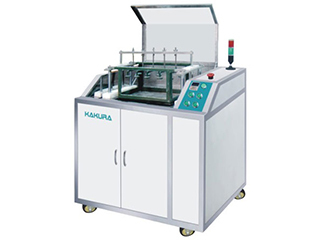
3. Frequency selection
The frequency of ultrasonic cleaning machines is generally between 28kHz and 120kHz, while the frequency used for industrial cleaning is generally less than 60KHz, with the most commonly used frequency being between 20-40KHz. A frequency of around 20KHz has high cavitation intensity and noise, and is used for cleaning workpieces with high adhesion strength between the surface of large components and objects. For large-scale oil or rust removal, around 28-40kHz is generally used. A frequency of around 40KHz, with low noise and strong penetration ability, suitable for workpieces with complex appearances, blind holes, dirt, and weak surface adhesion. For cleaning parts with small gaps, narrow slits, and deep holes, it is better to use high frequencies above 40kHz. For cleaning clock parts, use 400kHz.
4. Selection of Heating System
(1) When cleaning objects, water or water-based solvents can be used as cleaning solutions. Heating systems can be selected, and the best cleaning temperature is 40-60 ℃. When the temperature rises, cavitation is prone to occur, so the cleaning effect is better.
(2) If using anhydrous organic solvents such as trichloroethylene as cleaning solution, it is possible to choose one without a heating system. Ultrasonic waves will generate a certain temperature during operation, and organic solvents have stimulating and anesthetic effects during the heating process. So it is not recommended to use such solvents as cleaning solutions.
Article source: Jiangmen Ultrasonic Cleaning Machine http://www.kpzfcsb.com/
-
04-01
Jiangmen Ultrasonic Cleaning Machine: What are the reasons for poor cleaning effect?
People originally use ultrasonic cleaning machines for convenience, and if ultrasonic cleaning is not clean, they will definitely feel sad in their hearts. What is the reason for the uncleanliness of
-
01-04
Cleaning process of ultrasonic cleaning machine
Cleaning processSelect a reasonable ultrasonic cleaning machine process based on the characteristics and contamination of the workpiece.4. How to choose between manual and semi-automaticManual operati
-
12-16
Instructions for using Jiangmen ultrasonic cleaning machine
1. Device ultrasonic cleaning machinePlease refer to the instruction manual of the ultrasonic cleaning machine to connect the temperature control sensor signal line, ultrasonic drive line, heater cont
-
12-10
Cavitation phenomenon of Jiangmen ultrasonic cleaning machine
Magical cavitation phenomenonWhen it comes to ultrasonic cleaning, some people may think that it is the use of high-frequency vibration of ultrasonic waves to destroy dust and dirt. Actually, ultrason