
How to deal with the rusting problem of Kaiping ultrasonic cleaning machine
What to do about the rusting problem of ultrasonic cleaning machine:
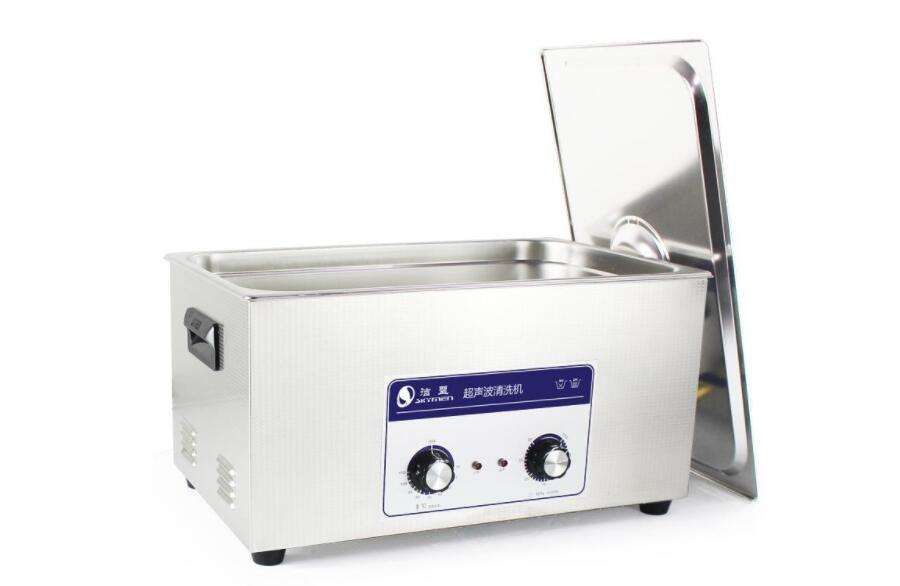
A common problem with ultrasonic cleaning machines is rusting of the cleaning tank. Some customers find it strange, but what about the good stainless steel? How could it rust. Based on this understanding, many customers do not pay attention to protection when using ultrasonic cleaning machines. No matter what liquid is used, even corrosive acidic or alkaline liquids, they are thrown there after use, not wiped clean, and even leave a lot of liquid in the cleaning tank. Over time, this leads to the problem of rusting in the cleaning tank. So, why does stainless steel rust?
Most people are very strange, thinking that 'stainless steel does not rust, and if it rusts, it is not stainless steel anymore. It may be a problem with the steel.'. In fact, this is a one-sided misconception about the shortage of stainless steel. Stainless steel can also rust under certain conditions.
The ultrasonic cleaning machine tank that comes into contact with liquids for a long time is the most susceptible to corrosion testing. Its stainless steel inner wall has the ability to resist atmospheric oxidation - that is, rust resistance, and also has the ability to corrode in media containing acid, alkali, and salt - that is, corrosion resistance. But the magnitude of its corrosion resistance varies with the chemical composition, interaction, application conditions, and environmental medium type of the steel itself. Like 304 steel pipes, they have absolutely excellent rust resistance in dry and clean atmospheres, but when moved to coastal areas, they will rust more easily in sea fog containing a lot of salt; And 316 steel pipes are outstanding. Therefore, not any type of stainless steel can resist corrosion and rust in any environment.
Stainless steel is a thin and stable chromium rich oxide film (protective film) formed on its surface, which prevents the continuous entry and oxidation of oxygen atoms and provides the ability to resist corrosion. Once for some reason, this thin film is continuously damaged, oxygen atoms in the air or liquid will continuously enter, or iron atoms in the metal will continuously separate, forming loose iron oxide, and the metal surface will also be continuously corroded. There are many ways for this kind of surface facial mask to be damaged. The common ways in daily life are as follows:
1. The surface of stainless steel is covered with dust or foreign metal particles containing other metal elements. In humid air, the condensed water between the attachments and the stainless steel forms a micro battery, triggering electrochemical reactions and damaging the protective film, which is called electrochemical corrosion.
2. Organic substances such as vegetables, soup, and phlegm adhere to the surface of stainless steel, forming organic acids in the presence of water and oxygen. Over time, these organic acids can corrode the metal surface.
3. The surface of stainless steel adheres to substances containing acids, alkalis, and salts (such as alkali water and lime water splashing on decorated walls), causing partial corrosion.
4. In polluted air (such as atmosphere containing many sulfides, carbon oxides, and nitrogen oxides), encountering condensed water can form sulfuric acid, nitric acid, and acetic acid liquid points, causing chemical corrosion.
All of the above situations can cause damage to the stainless steel surface protective film and lead to rusting. So, to ensure that the metal surface is permanently shiny and not corroded, we suggest:
1. It is necessary to regularly clean and wipe the stainless steel surface for decoration, remove attachments, and eliminate external factors that may cause decoration.
2. The use of strong acidic and alkaline cleaning liquids requires the use of 316 stainless steel, which can resist seawater corrosion.
3. Some ultrasonic cleaning machines on the market use stainless steel pipes with chemical compositions that do not meet the corresponding national standards and do not meet the requirements of 304 raw materials, which can also cause rust. This requires users to carefully choose products from reputable manufacturers. Therefore, customers should not only focus on price when choosing ultrasonic cleaning machines, as some cheap ones have their own tricks.
Another common problem with ultrasonic cleaning machines is the burning of fuses. Although this problem is relatively easy to clean by simply replacing the fuse, it is still important to pay attention to the usage methods to avoid unnecessary trouble. The reason why fuses burn out is usually due to unstable voltage. Assuming the instability of the mains power is eliminated, it is because we did not pay special attention when using it, and randomly turned on and off the machine power. Under repeated switching, it will cause a surge of current, which will then cause the fuse to burn out.
Furthermore, there is a time limit for the operation of small ultrasonic cleaning machines. Due to their short heat dissipation system, the ultrasonic oscillator will generate heat under high-frequency oscillation for a long time during uninterrupted use. If the heat cannot be effectively removed, it will cause overheating and ultimately burn out the components. The correct usage method is to let the ultrasonic cleaning machine rest for about 10 minutes after using it for about 40-60 minutes. Assuming that production requires long-term operation, it is recommended to customize an industrial single slot ultrasonic machine.
Article source: Kaiping ultrasonic cleaning machine http://www.kpzfcsb.com/
-
04-01
Jiangmen Ultrasonic Cleaning Machine: What are the reasons for poor cleaning effect?
People originally use ultrasonic cleaning machines for convenience, and if ultrasonic cleaning is not clean, they will definitely feel sad in their hearts. What is the reason for the uncleanliness of
-
01-04
Cleaning process of ultrasonic cleaning machine
Cleaning processSelect a reasonable ultrasonic cleaning machine process based on the characteristics and contamination of the workpiece.4. How to choose between manual and semi-automaticManual operati
-
12-16
Instructions for using Jiangmen ultrasonic cleaning machine
1. Device ultrasonic cleaning machinePlease refer to the instruction manual of the ultrasonic cleaning machine to connect the temperature control sensor signal line, ultrasonic drive line, heater cont
-
12-10
Cavitation phenomenon of Jiangmen ultrasonic cleaning machine
Magical cavitation phenomenonWhen it comes to ultrasonic cleaning, some people may think that it is the use of high-frequency vibration of ultrasonic waves to destroy dust and dirt. Actually, ultrason